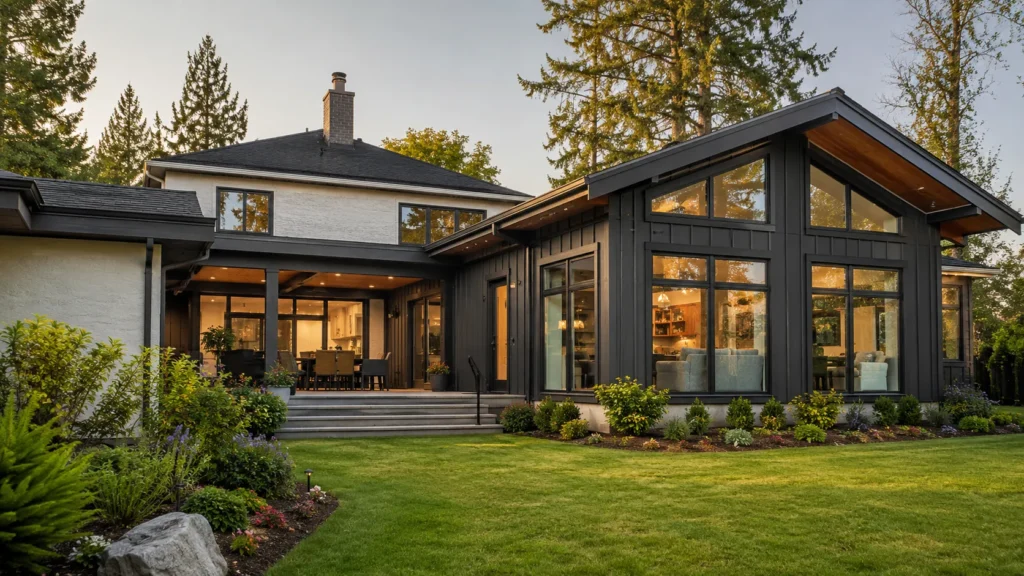
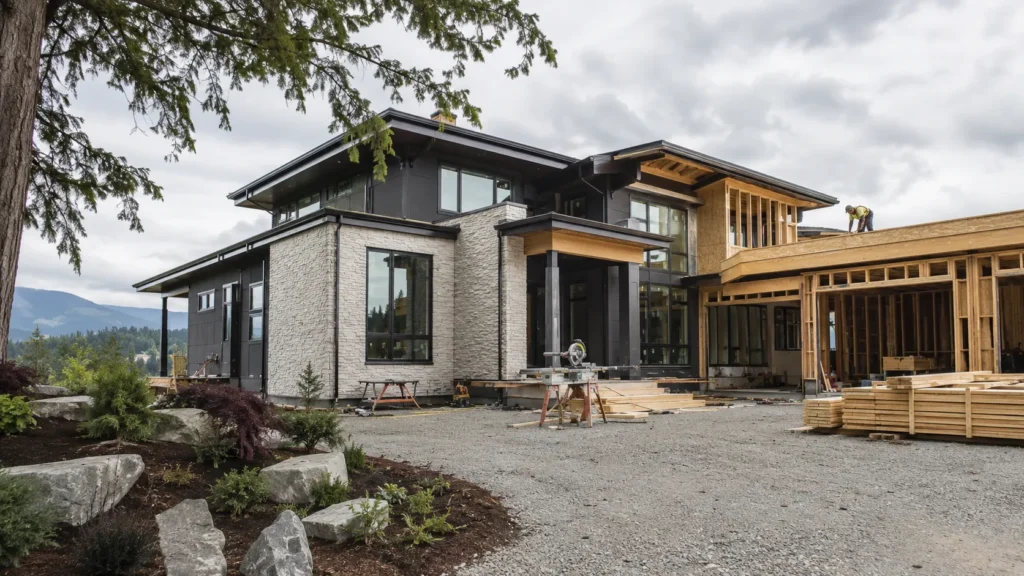
One of the first questions people ask when they start exploring custom home building in Abbotsford is how long it will take. The honest answer is that a well-run custom home build in Abbotsford typically takes 12 to 18 months from the first design meeting to occupancy. Some simpler projects come in closer to 10 months. Complex builds on difficult lots or with highly custom specifications can run 20 months or longer.
Understanding why it takes this long and what happens at each stage helps you plan your life around the project rather than being surprised by it. It also helps you recognize which parts of the timeline are genuinely fixed and which ones depend on the decisions you make.
This guide walks through each stage of a custom home build in Abbotsford from the perspective of a builder who has managed this process hundreds of times in this specific market.
STAGE 1: PRECONSTRUCTION AND DESIGN (2 to 5 months)
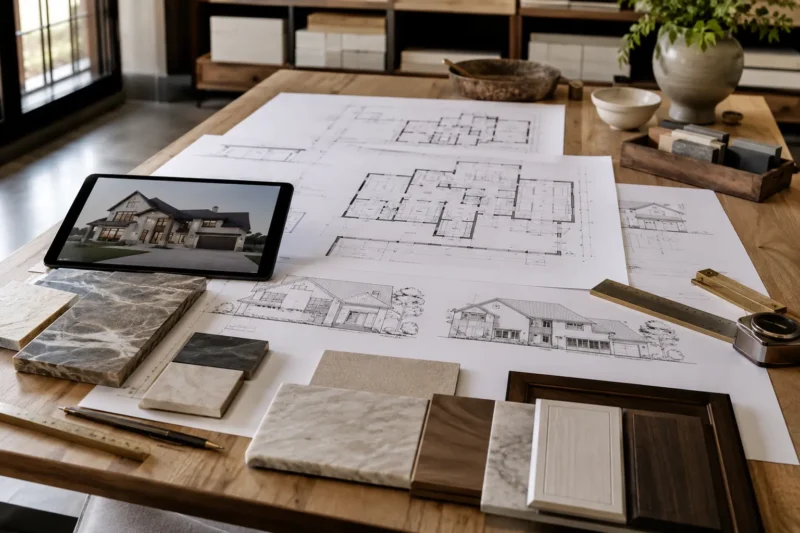
Before a single nail goes into the ground, a significant amount of planning work must happen. This stage is often underestimated by homeowners who want to start building quickly, and rushing it is one of the most common reasons projects run into problems later.
Preconstruction includes:
Land assessment: If you have already purchased your lot, this involves a site review covering orientation, slope, soil conditions, drainage, access, and any restrictive covenants or easements on the title. In Abbotsford, this matters more than in many municipalities because the city spans flat valley floor properties, sloped neighbourhoods like Eagle Mountain, acreage lots, and agricultural land reserve parcels, each with different considerations.
Design and engineering: Your architect or designer produces drawings. These go through revisions as you make decisions about layout, room sizes, exterior style, window placement, and features. Structural engineering follows once the design is confirmed. This stage takes longer than most homeowners expect because every design decision creates downstream consequences. Changing the kitchen layout at the design stage takes hours. Changing it after framing begins takes days and costs significantly more.
Energy modelling: The City of Abbotsford requires new single-family homes to meet Step 3 of the BC Energy Step Code, with EL-1 compliance under the Zero Carbon Step Code required for permits after March 10, 2025. An Energy Advisor must produce an energy model confirming the design meets these requirements before the permit application can be submitted. This is not optional and adds a step to the preconstruction process that many builders fail to plan for.
Material selections: Decisions about cabinetry, windows, flooring, tile, countertops, fixtures, and hardware need to be made before construction begins, not during it. Custom cabinetry has a lead time of 8 to 14 weeks. Windows and exterior doors can take 8 to 12 weeks. Stone countertops require templating after installation. Making these selections late is the single biggest driver of construction delays in the Fraser Valley. Experienced builders establish a selection deadline schedule at the start of preconstruction and hold their clients to it.
When preconstruction is done properly, everything downstream moves faster. When it is rushed, every stage of construction carries the cost of that shortcut.
STAGE 2: PERMIT APPLICATION AND APPROVAL (2 to 6 weeks)
Once the design package, structural drawings, and energy model are complete, the permit application is submitted to the City of Abbotsford Building Services.
The City of Abbotsford currently processes most residential building permits in 2 to 6 weeks. This is one of the fastest timelines among Lower Mainland municipalities, which is one practical advantage of building in Abbotsford compared to Metro Vancouver cities, where permit wait times often run 3 to 6 months or longer.
Depending on the scope of your project, separate permits may be required for electrical, plumbing, and mechanical (HVAC) work. These are typically processed alongside the main building permit, but may have separate submission and approval timelines.
If your lot is within the Agricultural Land Reserve or has any heritage or environmental designations, additional approvals may be required from the Agricultural Land Commission or other bodies before the building permit is issued. A builder with experience in Abbotsford will identify these requirements during the design stage rather than discovering them at permit submission.
STAGE 3: SITE PREPARATION AND FOUNDATION (3 to 6 weeks)
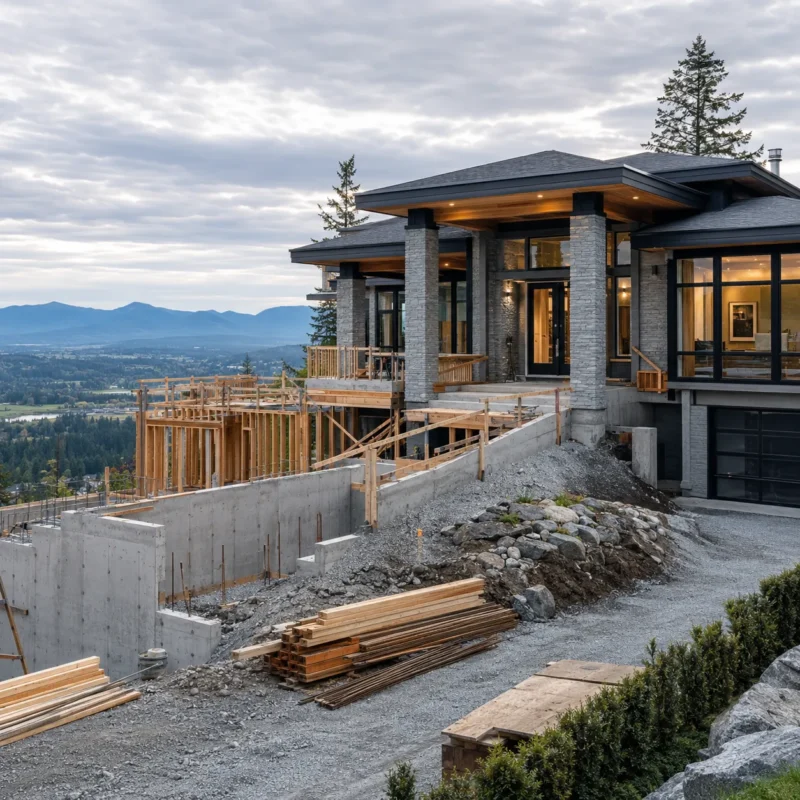
Once permits are in hand, site preparation begins. This includes clearing and grading, installing erosion and sediment controls, excavating for the foundation, installing drainage and waterproofing, and pouring the concrete foundation.
The timeline for this stage depends significantly on site conditions. A flat valley floor lot in Clearbrook or Matsqui with straightforward soil conditions moves faster than an elevated lot on Eagle Mountain, where rock encounters are possible, and retaining walls may be required. Robson Home Builders has worked across both conditions and plans the foundation stage timeline based on the actual site, not an optimistic assumption.
Concrete needs time to cure before framing can begin. In Abbotsford’s cooler fall and winter months, concrete curing takes longer, and the pour schedule is adjusted accordingly. Framing cannot begin until the foundation inspection is completed and the inspector signs off.
STAGE 4: FRAMING (3 to 5 weeks for a typical single-family home)
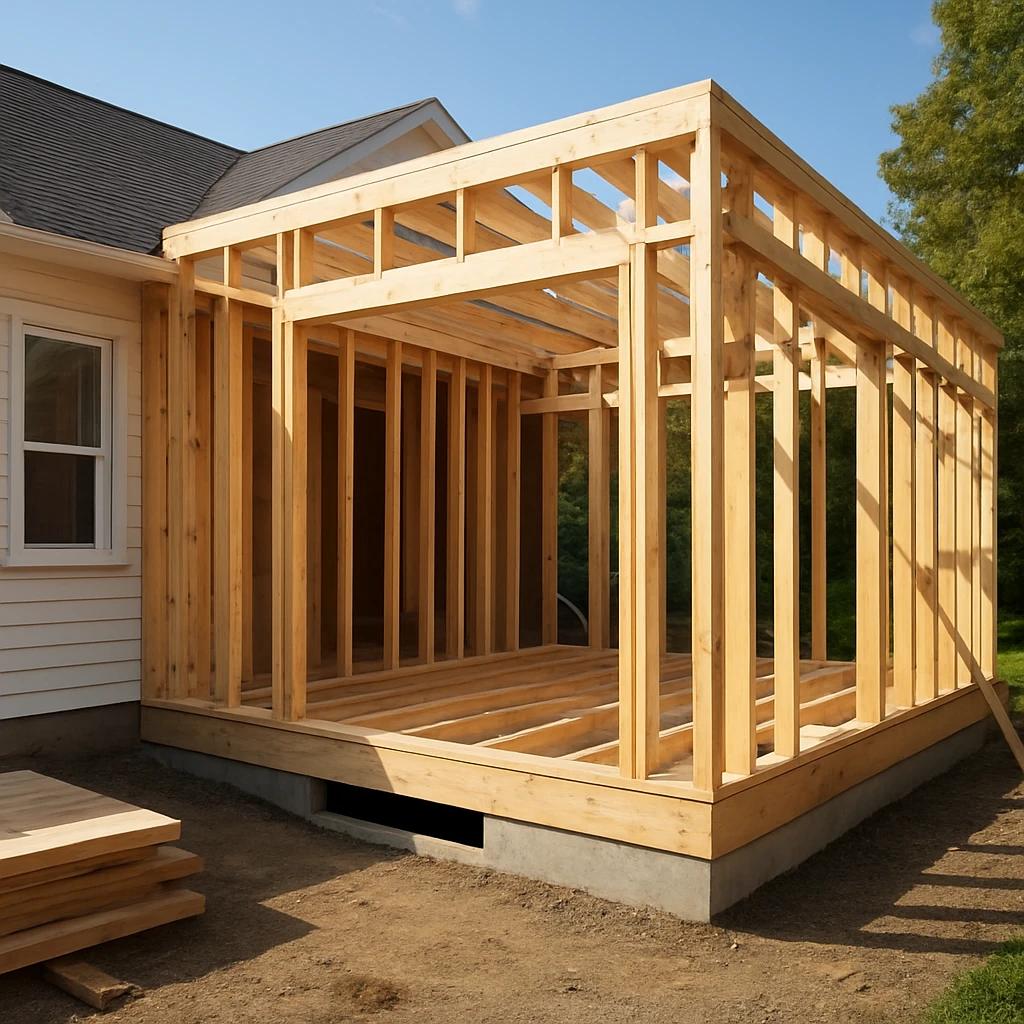
Framing is the stage where the home becomes visually recognizable. Walls, floors, and the roof structure go up. This is also one of the faster stages relative to what it delivers because framing is highly labour-intensive and moves quickly when the crew is experienced, and materials are staged on site.
Weather affects framing more than any other stage. Abbotsford’s fall and winter months bring consistent rain and occasional frost, both of which slow framing work and require additional care to keep materials dry and protected. Builders who work year-round in the Fraser Valley have weatherproofing protocols built into their framing schedule. Builders who primarily work in summer and take on winter projects without adjusting often run into delays.
After framing is complete, a framing inspection is required before the next trades can begin work inside the walls.
STAGE 5: MECHANICAL ROUGH-IN (3 to 6 weeks)
Once framing is approved, the rough mechanical trades begin. Electrical, plumbing, and HVAC rough-in happens while the walls and ceilings are still open and accessible.
This stage often involves coordination challenges because electrical, plumbing, and HVAC trades need to be sequenced carefully. In a custom home, the mechanical systems are more complex than a production build because the layout is unique, there are often more zones for heating and cooling, and features like in-floor heating, smart home wiring, or steam shower systems require careful planning.
Inspections for electrical and plumbing rough-in must be completed before insulation, and drywall can proceed. Scheduling these inspections is part of the builder’s project management responsibility. A backlog in the municipal inspection schedule can add a week or two to this stage.
Insulation goes in at the end of the rough-in stage, after all mechanical inspections are complete. In Abbotsford, meeting Step 3 of the BC Energy Step Code typically means higher-performance insulation specifications than a standard build. The Energy Advisor may conduct a mid-construction airtightness test at this stage to confirm the building envelope is on track to meet the required performance targets.
STAGE 6: DRYWALL AND INTERIOR FINISHING (6 to 10 weeks)
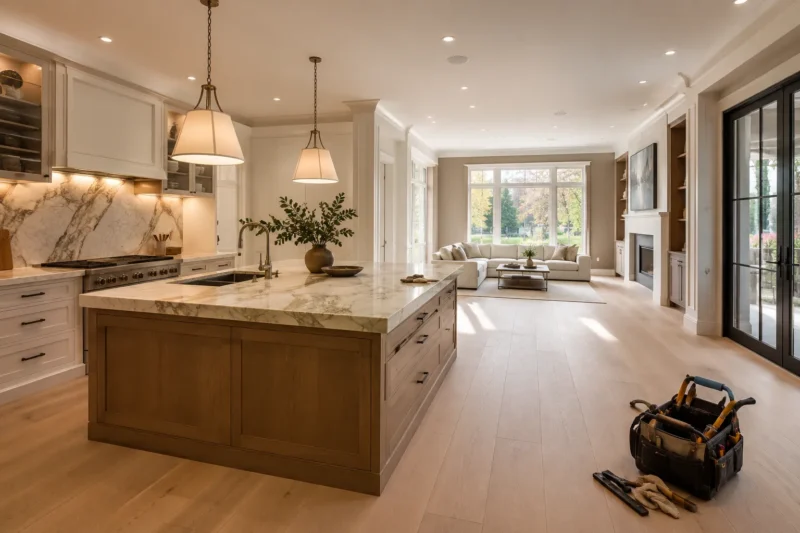
With the rough-in complete and inspected, drywall goes up. This is followed by painting, flooring installation, cabinet installation, countertop templating and installation, trim carpentry, and fixture installation.
This is the stage most homeowners get excited about because the home starts looking like a real house. It is also the stage where delayed material selections create the most visible problems. If cabinets were not ordered during preconstruction and are now on an 8 to 12-week lead time, the project stalls. If the countertop material selected is currently backordered, the kitchen cannot be finished. These delays are preventable with proper planning.
Tile work, particularly in bathrooms and wherever heated floors are installed, is labour-intensive and adds time. A custom home with multiple tiled bathrooms, a custom shower, and in-floor heating throughout will spend more time in this stage than a simpler build.
STAGE 7: EXTERIOR FINISHING (2 to 4 weeks, often concurrent with interior finishing)
Exterior work, including siding, roofing, exterior trim, windows, and doors installation, runs concurrently with some of the interior finishing stages. A well-organized builder sequences exterior and interior trades so they do not block each other.
In Abbotsford, the exterior finishing stage has a weather sensitivity component. Caulking, painting, and siding installation have temperature minimums. In winter months, exterior finishing may be scheduled around weather windows or extended slightly to accommodate wet or cold conditions.
STAGE 8: FINAL INSPECTIONS AND OCCUPANCY (2 to 4 weeks)
Before you can move in, a series of final inspections must be completed and signed off by the City of Abbotsford Building Services. These include the final building inspection, final electrical inspection, final plumbing inspection, and the energy compliance final report from the Energy Advisor confirming the completed home meets BC Energy Step Code requirements.
The occupancy permit is issued once all inspections are cleared. You cannot legally occupy a new home in BC without it. A builder who tells you inspections are just a formality has not been through enough final inspection processes to know that.
The full timeline at a glance
| Build stage | Typical duration |
| Preconstruction and design | 2 to 5 months |
| Permit approval | 2 to 6 weeks |
| Site prep and foundation | 3 to 6 weeks |
| Framing | 3 to 5 weeks |
| Mechanical rough-in | 3 to 6 weeks |
| Drywall and interior finishing | 6 to 10 weeks |
| Exterior finishing (concurrent) | 2 to 4 weeks |
| Final inspections and occupancy | 2 to 4 weeks |
Total realistic range: 12 to 18 months from first design meeting to move-in.
The most common ways projects run long are delayed material selections during preconstruction, weather delays during framing or foundation in fall and winter, inspection scheduling backlogs, and scope changes during construction that require revised drawings and re-inspection.
The most effective things a homeowner can do to keep a project on schedule are: make all material selections before the builder needs them (not when they ask for them), avoid scope changes once framing begins, and choose a builder who manages inspection scheduling proactively rather than reactively.
Why does this matter when choosing a builder
A builder who quotes you a 6-month timeline for a full custom home in Abbotsford is either planning to skip important steps, has not done this in the Abbotsford permit environment recently, or is telling you what you want to hear. Realistic timelines are a sign of an experienced builder who has actually run these projects from start to finish.
Robson Home Builders has been building custom homes in Abbotsford and the Fraser Valley for over 20 years. Nick Robson is on site for every project, manages the permit process from submission to final occupancy, and plans timelines based on actual site conditions rather than best-case assumptions.
If you are planning a custom home in Abbotsford or the Fraser Valley, contact us to schedule a free site consultation. We can review your lot, discuss realistic timelines for your scope, and help you understand what to expect at each stage before construction begins.
Frequently asked questions
How long does it take to build a custom home in Abbotsford?
A typical custom home build in Abbotsford takes 12 to 18 months from the first design meeting to occupancy. Simpler builds on straightforward lots can come in at 10 to 12 months. Complex builds with difficult site conditions, extensive custom features, or large floor plans can run 18 to 20 months or longer.
How long does it take to get a building permit in Abbotsford?
The City of Abbotsford Building Services currently processes most residential building permits in 2 to 6 weeks. This is faster than most Metro Vancouver municipalities. However, the permit application requires a complete design package, structural engineering, and an energy compliance report from an Energy Advisor before it can be submitted. Preparing these documents typically takes 2 to 5 months during the design stage.
What is the BC Energy Step Code, and how does it affect my custom home build timeline in Abbotsford?
The BC Energy Step Code is a performance-based energy efficiency standard required under the BC Building Code. The City of Abbotsford currently requires new single-family homes to meet Step 3, with EL-1 Zero Carbon compliance required for permits after March 10, 2025. This means your builder must engage an Energy Advisor to produce an energy model during the design stage, potentially conduct a mid-construction blower-door test, and provide a final compliance report before the occupancy permit is issued. A builder who plans for this from the start adds very little to the timeline. A builder who discovers it at permit submission can add weeks of delay.
What causes the most delays in a custom home build?
The most common delay causes in Abbotsford custom home builds are late material selections (cabinetry, windows, countertops ordered too late to arrive when needed), scope changes during construction that require revised engineering or drawings, weather delays during foundation and framing in fall and winter, and inspection scheduling backlogs. Most of these are preventable with proper preconstruction planning.
When should I start planning my custom home build if I want to be in by a specific date?
Work backwards from your target occupancy date and add 12 to 18 months. If you want to be in your new home by summer 2027, you need to be in active design discussions no later than the end of 2025, with permits submitted by spring 2026. Given how often preconstruction runs longer than expected, starting earlier than you think you need to is almost always the right approach.
Can a custom home be built faster than 12 months in Abbotsford?
In some circumstances, a smaller or simpler custom home on a straightforward lot with all materials pre-selected and no scope changes can be completed in 10 to 11 months. This requires a very organized preconstruction process, all selections made before construction begins, no weather delays, and a smoothly scheduled inspection process. It is achievable, but should not be the planning assumption for a full custom home with a complex design.